The floating world of Koen Olthuis

Global warming is no longer an intellectual concern, rather a critical issue around the world. Weather patterns have changed and water levels are rising. Architect Koen Olthuis, co-founder of The Netherlands-based Waterstudio has come up with some innovative concepts to deal with the phenomenon. While it’s innovative in the rest of the world, it’s a way of life in Holland, where a third of the country lies below sea level and dykes, pumps and dams are a common feature engineered to control the water levels.Olthuis and his firm Waterstudio have come up with solutions that make water a foundation for his structures, rather than a threat. Olthuis has designed several floating homes in the Netherlands and now he brings his amphibious designs to Dubai, where waterfront living is all the rage. The emirate is blessed with miles of golden beaches but Olthuis shows us how we can live in close proximity to water without compromising on either the form or the function. Waterstudio, a part of a consortium with Royal Haskoning and led by Dutch Docklands are involved in the Floating Proverb project at the Palm Jebel Ali, as well as several other ground-breaking projects which are in various stages of feasibility studies.De51gn spoke to the architect whose amphibious projects are under development at The Palm islands Jebel Ali.

20070829-koen-olthuis-zw.jpg
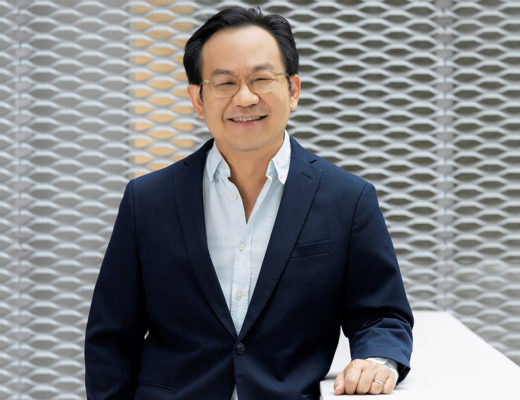
Koen Olthuis (Photo courtsey: Waterstudio.NL)

D: How did you come upon the concept of building on water?
KO: Much of Holland is situated under sea level which makes it very vulnerable to floods and even minor fluctuations in water level. But through technical innovations, the Dutch created land from water. They made a landscape of polders– wetlands which are being kept dry by pumping out water. While studying architecture, I was disappointed with the fact that the fellow students just expected the conventionally taught concepts of how buildings should look like and how the urban developments should be designed. It was as if the students and teachers had forgotten that Holland is an artificial landscape that is always changing by the constant threat of the water.I thought that the Dutch architects should look more at our ancestors who didn’t fear technological innovations and new concepts to live in places where people couldn’t live before. For me, it also seems irrational that I live in an artificial country in which pumps are pumping out water 24/7 to keep one-third of the country dry while sea levels are rising and the climate is changing so I thought that it is a necessity to focus on concepts which enable us to live with water rather than fight it.

D: You have designed many floating homes in your country and now you’re working on a number of projects in Dubai. Please tell us something about these projects and how they are different from those in The Netherlands?
KO: Dubai has some similarities and also differences with The Netherlands. The similarity is that both countries have been designed in a flat empty landscape– Holland has the green polders and Dubai has the beautiful desert. So both are in a way artificial and both have water to build within or on water. The differences are that The Netherlands has become very conservative against changes and new technologies, whereas, Dubai seizes every opportunity to embrace changes and technology for a better future.The emirate has shown vision from within a very small time-frame. The Netherlands did the same a few hundred years ago but the vision seems to have been lost in the modern times. In Holland we have a lot of water experience and we’ve been using that to design and create new solution, but Dubai seems to be more open to such path-breaking ideas, that have led to projects such as The Palm and The World islands.

010-midden-eiland.jpg
Project in Holland (Photo courtsey: Waterstudio.NL and BAM)

D: What are the biggest challenges about water-based designs and particularly in the context of Dubai, where the weather conditions can be very harsh?
KO: The biggest challenges are stability and sustainability. We want to design perfect floating developments that last at least as long as normal buildings on land with a comfort that can be engineered upfront. Sustainability on water is even more important than on land. Emission has to be zero and power plants must be self-supporting and sustainable in nature such as solar, wind and wave energy. However, the biggest challenge is soci0-economic which means that we have to explain users, developers and decision-makers that floating developments is next step in world-wide urban development. We need to explain to them that it is safe, long-lasting and technically and economically feasible.

D: How would you describe Dubai and what’s happening here in reference to the architecture boom?
KO: Dubai has become the centre of the world in building activities and it’s setting benchmarks. What it is doing can’t be placed in a logical economics formula found in a text book. Dubai sets an example of what pushing the boundaries of the technological world can do.

2007-01-05-001-driehoek.jpg
Cruise terminal (The Palm Jebel Ali) illustration only (Photo courtsey: Waterstudio.NL and Dutch Docklands)

D: Everyone is talking about sustainable development and how global warming is influencing architecture at present. Do you feel that it’s being taken seriously or is it just a big gimmick?
KO: It started as a big gimmick but that is not bad because even gimmicks have influence and act as catalysts, which has now led to a point where it’s no longer just a hype but a natural progression towards designing for a better future. All countries have always needed an economical driver to implement new innovations. Thanks to people like Al Gore, that we know now that it is still possible to reap financial benefits from a sustainable environment. That is a big change.

2007-01-05-002-driehoek.jpg
Cruise Terminal, The Palm Jebel Ali (illustration only) Photo courtsey: Waterstudio.NL and Dutch Docklands

D: How sustainable are floating homes?
KO: You can make them as sustainable as you like. By building on floating foundations, you’re in closer contact with nature, than conventional houses on land. Water can be used for sustainable solutions such as water cooling. Also the solar energy is much stronger on water; energy from the waves and the wind on water can also be used for generating energy. Salt and sweet water osmosis are also some of the possibilities that can be explored.

D: Who is your favourite architect and do you have a favourite building or structure?

KO: My favourite architect is Gaudi because he integrated logical construction copied from nature into his buildings which are still some of the most admired structures. Singe-handedly, he succeeded in changing the face of the city by just following his drive and passion for architecture.

2007-04-02-008-hasselerharm.jpg
Floating home in Holland (Photo courtsey: Waterstudio.NL)

w119-20050406-leiden.jpg
(Photo courtsey: Waterstudio.NL)

rotatingfloatingtower.jpg
Rotating-floating tower proposal for Dubai (Photo courtsey: Waterstudio.NL and Dutch Docklands)

2 Comments

  1. Dan Wittenberg said

    We have been producing permanent floating structures for over 25 years. Check us out. You are on thr right track. The technology is already there.

Leave a Reply