Exclusive interview with Tahmineh Javanbakht of design studio Artecnica

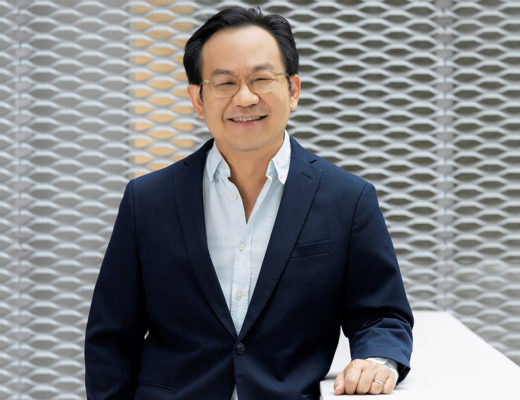
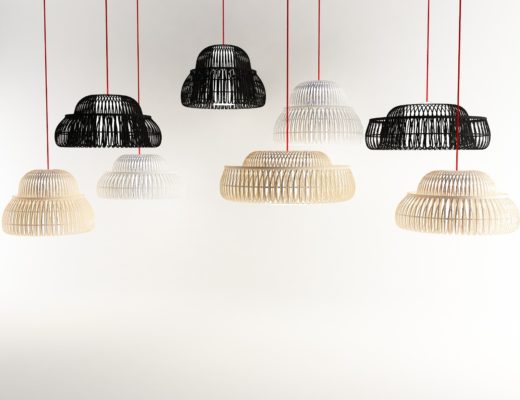
De51gn spoke to LA-based design studio Artecnica’s co-founder Tahmineh Javanbakht, who along with her partner Italian architect Enrico Bressan, is at the forefront of an ecological and socially-responsible design movement. This week Artecnica is exhibiting its new range of products by Tord Boontje, Inga Sempé, Joris Laarman and Bressan at Zona Tortona in Milan, the more edgy satellite event of the flagship Milan International Furniture Fair at Rho Pero.

tahminehenrico.jpg

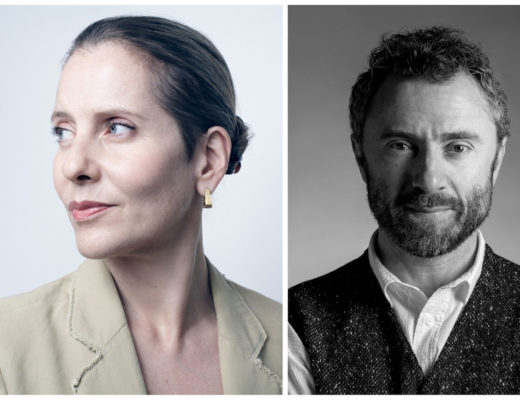
Enrico Bressan and Tahmineh Javanbakht

D: Your Design with Conscience venture has produced some very positive results not just for the design industry but for the entire eco-friendly movement. You’re a pioneer in this respect. How did you come up with the whole concept and how challenging has it been to work with craftsmen in remote locations?

TJ: Enrico (Co-founder of Artecnica and Tahmineh’s husband) was on the board of a foundation that would build low cost housing for the poor in such places as The Dominican Republic. He also worked through the same foundation with a group of students from the Eindhoven Academy of Design, collaborating with some artisans in Brazil. The teacher was Hella Jongerius. We found the project very rich and rewarding, much more than we expected. We thought why not bring this amazing idea to the rest of the company. As designers, we always see an opportunity to solve problems. Creating opportunities for artisans around the world and addressing environmental problems will try to help solve these issues.

Design with Conscience started out as an interesting project to do through either offering opportunities for artisans that otherwise would not utilise their craft commercially, and/or turning recycled materials into beautiful objects that could be re-used. When people think of the word ‘design’, they typically think of a “finished object.” Enrico and I wanted to help move this conception of design beyond the “finished object” by highlighting the design and manufacturing process. We wanted to create meaningful design that generates positive impact for everyone involved. We felt the journey was as beautiful as the end result.

large-bowl_beads-pieces_1.jpg

Beads and Pieces bowl by Hella Jongerius

D: What were the initial reactions to your proposals? Was it easy to convince the designers that rural craftsmanship will not affect the high quality of the products, that the designers are associated with?

TJ: When Artecnica first launched the Design with Conscience collection, we did encounter some resistance and doubt as people questioned the long-term commercial viability of these projects. Through trial and error, we’ve learned quite a bit over the years, and we’ve been able to apply such institutional knowledge to new products in the line. Thankfully, the process gets easier with time which has allowed us to accelerate the pace at which we introduce new Design with Conscience products. Ultimately, we’d like to prove that while the process may seem challenging, creating artisan-based design makes social, ethical and business sense.

I’m also seeing that an increasing number of designers and design companies are looking to artisan-based production and craft techniques to take their designs further. Over the years, Design with Conscience has become a sort of calling card for us, as designers become more aware of our track record for bringing handcrafted objects into the high design landscape.

transneomatic_group.jpg

Transneomatic by Campana Brothers
D: The boundaries between art and design have blurred in recent times, and being an artist yourself, what do you feel about the phenomenon? Is it a case of design leveraging on art, which has conventionally always fetched a higher piece?

TJ: You are absolutely right that art has always fetched a higher price. But in reality, designers’ work is finally getting the long due respect that it deserves. There is not much difference in the process but the difference is how it is perceived.

garland-on-table-lamp-stand_1.jpg

Midsummer light on stand by Tord Boontje

D: Tell us something about the exhibition that you’ll be bringing to the soon to be opened Villa Moda store at Dubai International Financial Centre, in the near future?

TJ: While individual Design with Conscience pieces have garnered critical and commercial recognition, we wanted to showcase the collection as a coherent body of work. We also saw an opportunity to educate the public about Design with Conscience’s core principles, specifically how artisan-based production can yield exciting, innovating design while creating a lasting impact on the artisan communities involved.

Also, we wanted to highlight the fact that the Design with Conscience collection is borne out of collaborative exchanges between Artecnica, designers and artisan groups so we chose a name for the exhibition that would encapsulate the journey of these products: “Re-Imagining the Workshop: Design with Conscience.”

Typically, the industrial design process involves a well-defined designer-manufacturer relationship, wherein, the designer submits fully-developed and precise specifications for the manufacturer to execute. On the other hand, the design process of a Design with Conscience project works differently because we view design as a more collaborative endeavour– a more organic process that involves all parties at all levels of the creation process. This therefore extends the boundaries of the designer’s workshop into the world of the artisans.

Here, Artecnica acts as a bridge and catalyst by connecting once isolated parties, by creating a market for craft in the high design landscape, and by assigning a higher value to unique handcrafted design. Artecnica’s main function here is to keep an eye on the goal: to obtain a marketable, commercially-viable product to be able to maintain the sustainability of the project.

transglass-group-shot.jpg

tranSglass collection by Emma Woffenden and Tord Boontje
D: You work with some of the top names in the design industry such as Tord Boontje, Hella Jongerius, Joris Laarman and the Campana Brothers to name a few. Is there a particular style that you have in mind while picking out the designers?

TJ: We pick designers based on how well their design philosophy matches Artecnica’s. Our design direction is characterised by expressive aesthetics executed in an engineered fashion, typically with the use of innovative materials or fabrication techniques. The first thing is we greatly admire and respect these designers’ work.

Tord Boontje for example has been an amazing source of talent, creativity and individuality. We work well with each other.

D: Enrico (an architect by training) is currently developing architectural programmes with foundations and design schools in several countries including The Dominican Republic and Brazil. Education obviously plays an important part in the development of art and design. Do you and Enrico feel that enough is being done in this direction to take design to a more grassroots level make it accessible to more people. There still seems to be a very elitist approach to design and architecture, but perhaps not so much in art.

TJ: We believe that Artecnica has been able to create meaningful design that is also accessible and affordable. However, we have also developed products that are somewhat more elitist from a price standpoint, such as our Come Rain Come Shine chandelier.

However, our focus on creating artisan-based product, involve more and a wide variety of people in various countries in the design world. So while some of our products can be seen in more exclusive showrooms and galleries, the majority of our products are available through more accessible channels.

While design by definition wants to be accessible and universal, it typically begins as an avant-garde initiative because by definition, good design presents innovative solutions. Eventually, wider acceptance is gained as what was once innovative has now become more ubiquitous. We shouldn’t forget that design simply means to find effective solutions to everyday problems. Ultimately, the most successful designs endure time and become part of our everyday experiences.

second-shadow_1.jpg

2nd Shadow by Tord Boontje
D: You are originally from Iran, a land very rich in culture and arts. Elsewhere in the Middle East too, there is a burgeoning art and design scene with the opening of several art and design galleries such as traffic gallery, who have also launched the region’s first design competition. What is the perception in the the US with what’s going on here with regards to art and design?

TJ: Art and design along with the globalisation process are expanding into new regions at an increasing rate. Specifically, with all the development going on in the Middle East, there is also an increasing need and interest in modern design.
This is quite interesting and it is our conviction that Artecnica’s design will be well-suited to the Middle East because our products combine highly expressive visuals with very functional aspects. We find this very much in line with Middle Eastern traditional arts and past product design and craft.

Being originally from Iran, me and Enrico (who is originally from Italy) we find our design sensibility and style very much a blend between east and west. Ever since I was a child I have liked collages. I would walk through the streets of Isfahan and see the beautiful mosques and architectures, then go home and be in this very modern house. I love the mixing of patterns, colours, shapes, history and the harmony of it. The world needs to get the cue from the designers to take our differences and use it in a positive complementary way.

wk-utencils-1_1.jpg

Witches’ Kitchen accessories by Tord Boontje are being exhibited at Zona Tortona this week.

D: Artecnica blends art and technology harmoniously. Is there ever an instance, when you feel that one element might be overshadowing the other?

TJ: Our most successful products exhibit a synergistic relationship between art and technology. Such products include our now iconic Midsummer Light (by Tord Boontje) and the soon-to-be launched WirePod (a new kind of power pod by Joris Laarman) as well as Kaktus (an intricate and lightweight stool capable of supporting great weight by Enrico Bressan).

Perhaps the question is whether a harmonious relationship can be achieved between form and function. At Artecnica, we believe that form and function need not be mutually exclusive. To us, the form and function of a successful design object should be mutually reinforcing; consequently, altering the form of an object will degrade the function and vice versa.

D: Which are some of your favourite (iconic) designs by any designer, either in the past or contemporary times?

TJ: Well, I have always loved the Barcelona collection by Mies van der Rohe and everything by Le Corbusier. The mirrored rooms in old Persian house, the mosaic works of Islamic architecture, the Midsummer lights by Tord Boontje. I can go on…

D: What is your personal style when it comes to interiors?

TJ: Clean and uncluttered, always mixing the styles. Collaging of inherited pieces, found and desired objects but it has to be all liveable, especially if one has two very active kids with lots of friends visiting.

Artecnica’s iconic Midsummer Light by Tord Boontje is available at S*uce store in Dubai at the Village Mall (04 3447270) and the newly opened 50°C lifestyle store at Souk Al Bahar in Downtown Burj Dubai (04 4200414).

All images courtesy: Artecnica

Leave a Reply